Arduino Mega (ATmega2560)
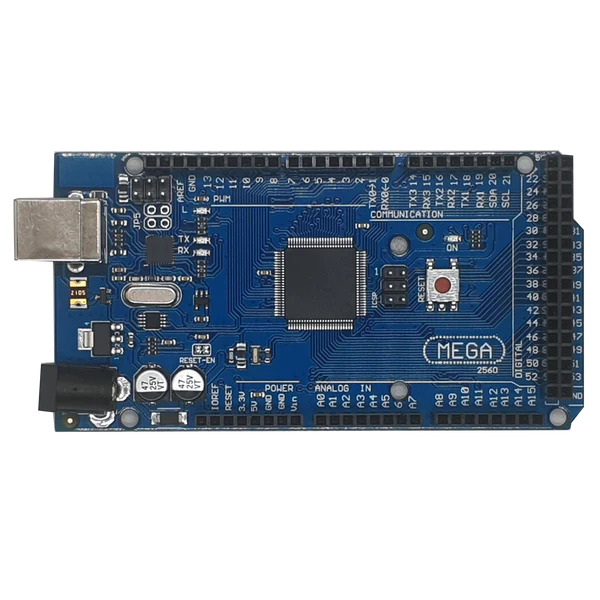
The Arduino Mega is a high performance development board based on the ATmega2560 microcontroller.
It is meant to be used in any difficult project to feature many sensors, actuators and various communication modules.
The Mega contains much larger specifications as compared to Arduino Uno, and greater memory size (for more input/output pins).
The ATmega2560 microcontroller has 54 digital input/output pins, 16 analog inputs,
and several serial communication ports. Such features permit the board to control motors,
measure sensor signals, exchange data with computers, and communicate with wireless modules
such as Wi-Fi, Zigbee, or GSM systems.
Main Technical Features
- ATmega2560 microcontroller on 16 MHz
- 54 digital input/output pins
- 16 analog input pins for interfacing sensors
- 256 KB flash memory for larger programs
- Four hardware serial communication ports
Both students and engineers can program the Arduino Mega with the same Arduino IDE environment
used for the Uno board. Because of its significant number of input/output pins, it is suitable
for projects such as robotic arms, smart greenhouse monitoring, automated production systems,
and multi-sensor environmental data logging platforms for research and engineering studies
Arduino Uno (ATmega328P)
The most popular development boards in embedded systems and electronics education
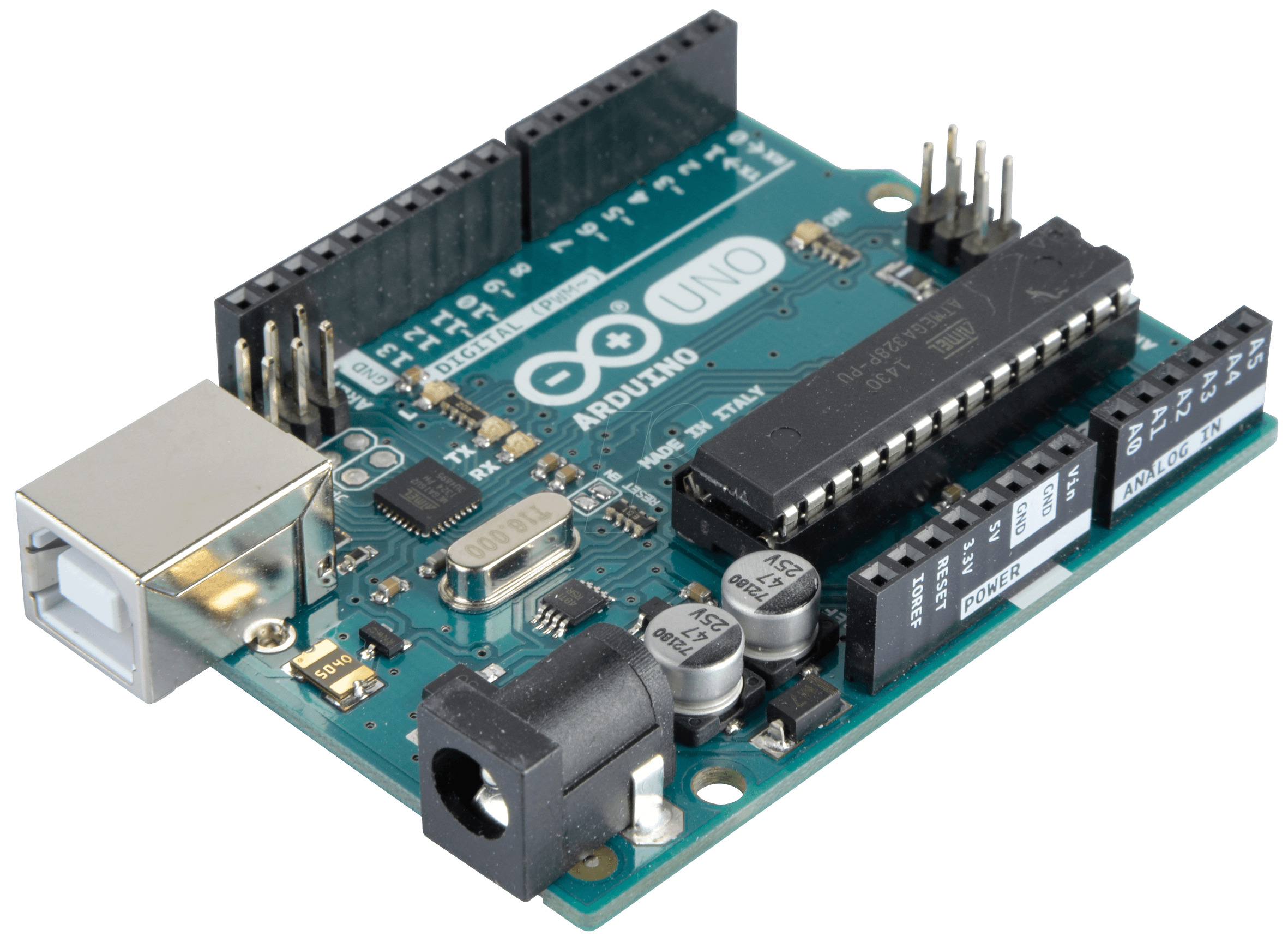
are known as the Arduino Uno. It operates based on the ATmega328P microcontroller
which holds the processor, flash memory, RAM, and input/output peripherals on a
single chip. This integration enables engineers to design small systems that can sense,
process, and control external devices.
The Arduino Uno is popular for beginning and intermediate engineering related projects
(e.g. home automation, environmental monitoring, robotics prototypes, and IoT sensor nodes).
Due to its straightforward coding environment and a large community, it is generally the
first microcontroller platform students adopt to learn hardware interfacing and embedded
programming.
Fourteen digital input/output pins are made available in the ATmega328P microcontroller,
along with 6 analog input pins, and PWM capability on multiple pins. Such features permit
the board to communicate with sensors, control motors, drive LEDs, and interface with
communication modules such as Bluetooth, Wi-Fi, or GSM devices.
Main Technical Features
- ATmega328P microcontroller @ 16 MHz
- 14 digital input/output pins
- 6 analog input pins for sensor measurements
- 32 KB flash memory can store programs
- UART, SPI and I2C communication links
Students have the Arduino IDE to program the Arduino Uno, which provides friendly C/C++ programming
language support with simplified libraries designed to control hardware. Typical beginner projects
include temperature sensing systems, automatic lighting systems using LDR sensors, motor control circuits,
and small IoT devices transmitting sensor data to online dashboards
Arduino Nano (ATmega328P)
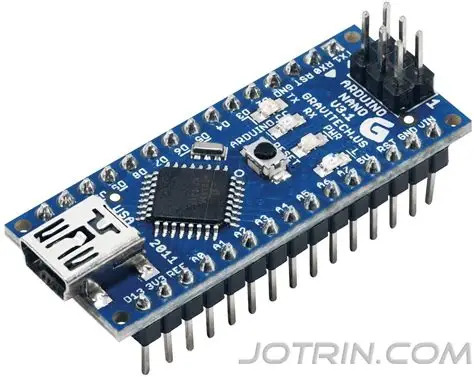
The Arduino Nano is a compact microcontroller board based on the ATmega328P,
designed for space-constrained and embedded applications. It provides the
same core functionality as the Arduino Uno but in a smaller form factor,
making it suitable for breadboard-based designs and portable systems.
The board operates at 5V with a clock speed of 16 MHz and includes
14 digital input/output pins and 8 analog input pins. It supports
PWM on selected pins and communication protocols such as UART, SPI,
and I2C, allowing integration with sensors, displays, and wireless modules.
Calibration in the Arduino Nano is mainly related to analog sensors.
Accurate readings require proper reference voltage selection and
sensor calibration using known standards. Engineers often implement
software calibration techniques to improve measurement accuracy,
especially in temperature, pH, and voltage sensing applications.
The Nano’s pin configuration includes digital pins for control,
analog pins for sensor input, and dedicated communication pins.
Its small size allows direct placement on breadboards, simplifying
circuit prototyping and reducing wiring complexity in embedded systems.
Main technical features include the ATmega328P microcontroller,
32 KB flash memory, 2 KB SRAM, 1 KB EEPROM, and support for
multiple communication interfaces. The Arduino Nano is widely used
in compact IoT devices, wearable electronics, and low-power
embedded systems requiring reliable performance.
ESP32 Espressif
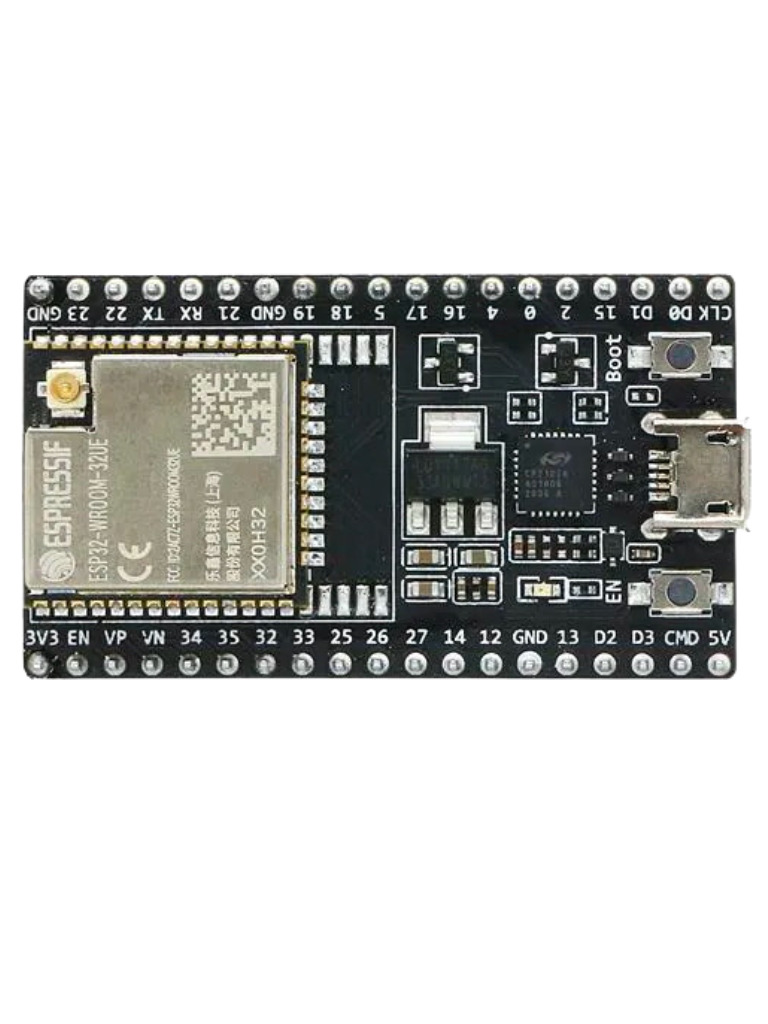
The ESP32 is a powerful microcontroller developed by Espressif Systems,
designed for advanced embedded systems and Internet of Things applications.
It integrates both Wi-Fi and Bluetooth capabilities, making it highly
suitable for wireless communication and remote monitoring systems.
Its dual-core processor provides higher performance compared to
traditional microcontrollers such as the Arduino Uno and Nano.
The ESP32 operates at 3.3V and includes a wide range of GPIO pins that
support digital input/output, analog input, PWM, and communication protocols.
It supports UART, SPI, and I2C interfaces, allowing seamless integration
with sensors, displays, and external modules. The microcontroller also
includes capacitive touch pins, enabling touch-based control systems
without the need for additional hardware components.
In terms of calibration, the ESP32 requires proper handling of its ADC
readings due to non-linear characteristics. Engineers often implement
software calibration techniques and reference voltage adjustments to
improve measurement accuracy. Proper calibration is especially important
in applications involving temperature sensing, voltage monitoring,
and environmental data acquisition systems.
The ESP32 is widely used in smart IoT systems due to its wireless
capabilities and processing power. Common applications include
smart home automation systems, IoT-based water quality monitoring,
industrial data logging systems, and remote energy monitoring platforms.
It is also suitable for projects involving cloud integration and
real-time data visualization using IoT dashboards.
Because of its versatility, the ESP32 is recommended for advanced
engineering projects that require connectivity and real-time control.
Students and engineers can use it for smart agriculture systems,
remote health monitoring devices, smart grid systems, and AI-integrated
IoT applications. Its ability to handle multiple tasks simultaneously
makes it ideal for complex embedded system designs.
Technical Specifications
- Dual-core processor up to 240 MHz
- Operating voltage: 3.3V
- Built-in Wi-Fi (802.11 b/g/n)
- Built-in Bluetooth (Classic and BLE)
- Multiple GPIO pins with PWM support
- Analog-to-Digital Converter (ADC)
- Digital-to-Analog Converter (DAC)
- UART, SPI, and I2C communication interfaces
- Capacitive touch sensing pins
- Low power consumption modes
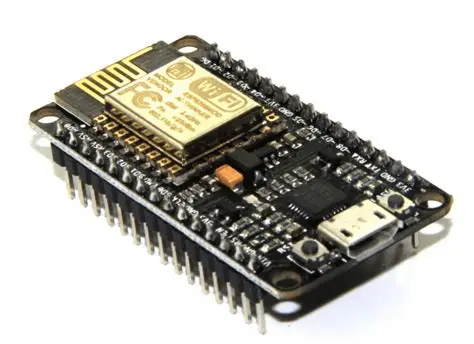
ESP8266 Espressif Systems
The ESP8266 is a low-cost microcontroller developed by Espressif Systems,
specifically designed for Internet of Things applications. It features
built-in Wi-Fi capability, allowing devices to connect directly to the
internet without requiring additional communication modules. Despite its
small size and low cost, the ESP8266 offers reliable performance for
wireless embedded systems and remote monitoring applications.
The ESP8266 operates at 3.3V and provides several GPIO pins for digital
input/output operations, along with support for communication protocols
such as UART, SPI, and I2C. It also includes a single analog input pin
for sensor interfacing. These features enable integration with various
sensors, actuators, and display systems used in IoT-based designs
and real-time data communication systems.
Calibration of the ESP8266 mainly focuses on its analog input and sensor
readings. Since it has a single ADC channel with limited voltage range,
engineers often use voltage dividers and software calibration techniques
to improve accuracy. Proper calibration is essential when working with
sensors such as temperature sensors, gas sensors, and voltage monitoring
systems in IoT applications.
The ESP8266 is widely used in wireless IoT systems due to its simplicity
and cost-effectiveness. Common applications include smart home automation,
remote temperature monitoring, IoT-based energy tracking, and cloud-based
data logging systems. It is also suitable for projects that require
sending sensor data to web servers or mobile applications over Wi-Fi.
Engineers and students often use the ESP8266 for lightweight IoT projects
where low cost and wireless communication are priorities. Recommended
projects include smart switches, weather monitoring stations, remote
irrigation systems, and basic home security systems. Its ability to
connect directly to cloud platforms makes it ideal for real-time
monitoring and control applications.
Technical Specifications
- 32-bit microcontroller (Tensilica architecture)
- Operating voltage: 3.3V
- Built-in Wi-Fi (802.11 b/g/n)
- Clock speed up to 80 MHz
- Multiple GPIO pins for digital I/O
- Single Analog-to-Digital Converter (ADC)
- UART, SPI, and I2C communication interfaces
- Low power consumption modes
- Supports firmware updates over Wi-Fi (OTA)
- Compact and low-cost design
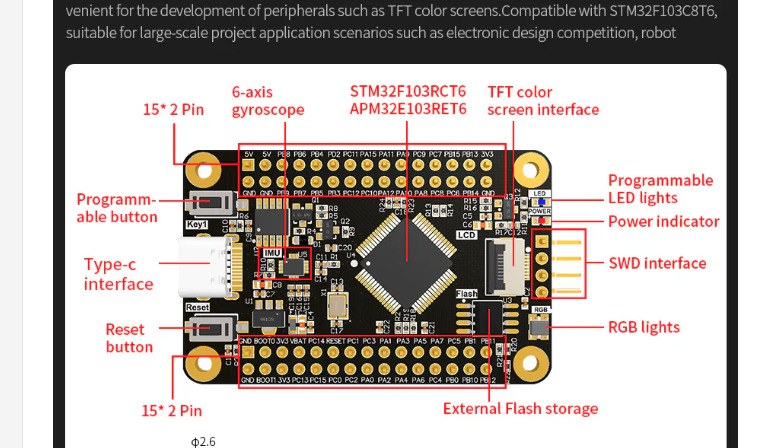
STM32F103 (STMicroelectronics)
The STM32F103 is a high-performance microcontroller developed by
STMicroelectronics, based on the ARM Cortex-M3 architecture. It is
designed for advanced embedded systems that require higher processing
speed and efficiency compared to traditional 8-bit microcontrollers.
Its architecture allows engineers to implement complex control systems
and real-time applications with improved performance and reliability.
The STM32F103 operates at 3.3V and provides a large number of GPIO pins
supporting digital input/output, analog input, PWM, and multiple
communication interfaces. It supports UART, SPI, I2C, CAN, and USB,
making it highly suitable for industrial communication and control
systems. This flexibility allows integration with sensors, actuators,
and external modules in complex embedded designs.
Calibration in the STM32F103 is essential for accurate analog-to-digital
conversion and sensor measurements. The microcontroller includes built-in
calibration features for its ADC, but engineers often implement additional
software calibration techniques to improve precision. Proper calibration
is critical in applications such as voltage monitoring, temperature
measurement, and industrial sensing systems.
The STM32F103 is widely used in industrial automation, robotics, and
real-time control systems due to its processing power and reliability.
Common applications include motor control systems, embedded control
units, data acquisition systems, and communication-based projects
where speed and accuracy are essential for system performance.
Engineers and students use the STM32F103 for advanced projects that
require efficient processing and real-time operation. Recommended
projects include robotic control systems, industrial automation,
smart energy monitoring systems, and embedded communication devices.
Its ARM-based architecture prepares students for professional
engineering environments and industry-level system design.
Technical Specifications
- ARM Cortex-M3 32-bit processor
- Clock speed up to 72 MHz
- Operating voltage: 3.3V
- Multiple GPIO pins with PWM support
- 12-bit Analog-to-Digital Converter (ADC)
- UART, SPI, I2C, CAN, and USB interfaces
- Up to 128 KB Flash memory
- 20 KB SRAM
- Timers for real-time control applications
- Low power consumption modes
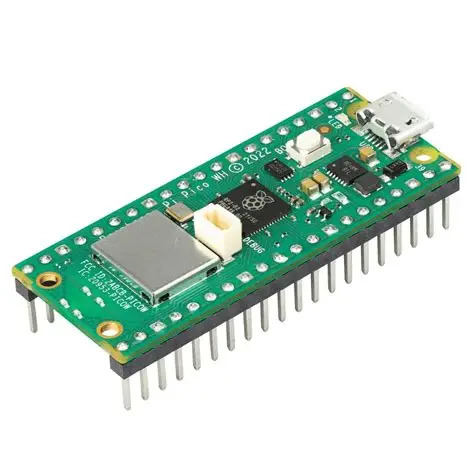
Raspberry Pi Pico (RP2040)
The Raspberry Pi Pico is a microcontroller board developed by the
Raspberry Pi Foundation, based on the RP2040 microcontroller. It is
designed for flexible and efficient embedded system development,
offering a balance between performance, cost, and ease of use.
Its dual-core architecture allows it to handle multiple tasks
simultaneously, making it suitable for modern engineering applications.
The RP2040 operates at 3.3V and provides multiple GPIO pins that support
digital input/output, PWM, analog input, and communication protocols.
It supports UART, SPI, and I2C interfaces, allowing integration with
sensors, displays, and communication modules. Its programmable I/O (PIO)
feature allows engineers to create custom hardware interfaces for
specialized applications.
Calibration in the Raspberry Pi Pico focuses on its analog inputs and
sensor measurements. Engineers often use software-based calibration
methods to improve ADC accuracy and ensure reliable readings. Proper
calibration is important when working with environmental sensors,
voltage measurement systems, and data acquisition applications.
The Raspberry Pi Pico is widely used in embedded systems, robotics,
and automation projects due to its flexibility and processing power.
Common applications include motor control systems, data logging,
sensor interfacing, and real-time control systems. It is also used
in educational environments to teach embedded programming concepts.
Students and engineers use the Raspberry Pi Pico for projects that
require efficient multitasking and hardware flexibility. Recommended
projects include robotic systems, smart control units, embedded
communication systems, and custom interface designs using PIO.
Its support for both C/C++ and MicroPython makes it accessible
for both beginners and advanced users.
Technical Specifications
- Dual-core ARM Cortex-M0+ processor
- Clock speed up to 133 MHz
- Operating voltage: 3.3V
- 26 GPIO pins with PWM support
- 12-bit Analog-to-Digital Converter (ADC)
- UART, SPI, and I2C communication interfaces
- 264 KB SRAM
- Programmable I/O (PIO) subsystem
- Supports C/C++ and MicroPython programming
- Low power operation